
ERA Calculator
Calculate Earned Run Average for baseball pitchers using U.S. standard 9 innings.
ERA Calculator
Our ERA Calculator helps baseball players, coaches, parents, and fans quickly calculate a pitcher’s Earned Run Average (ERA). ERA is one of the most widely used pitching stats in baseball because it shows how many earned runs a pitcher allows over a standard game. In the United States, ERA is normally calculated over 9 innings, which matches the standard length of a professional baseball game.
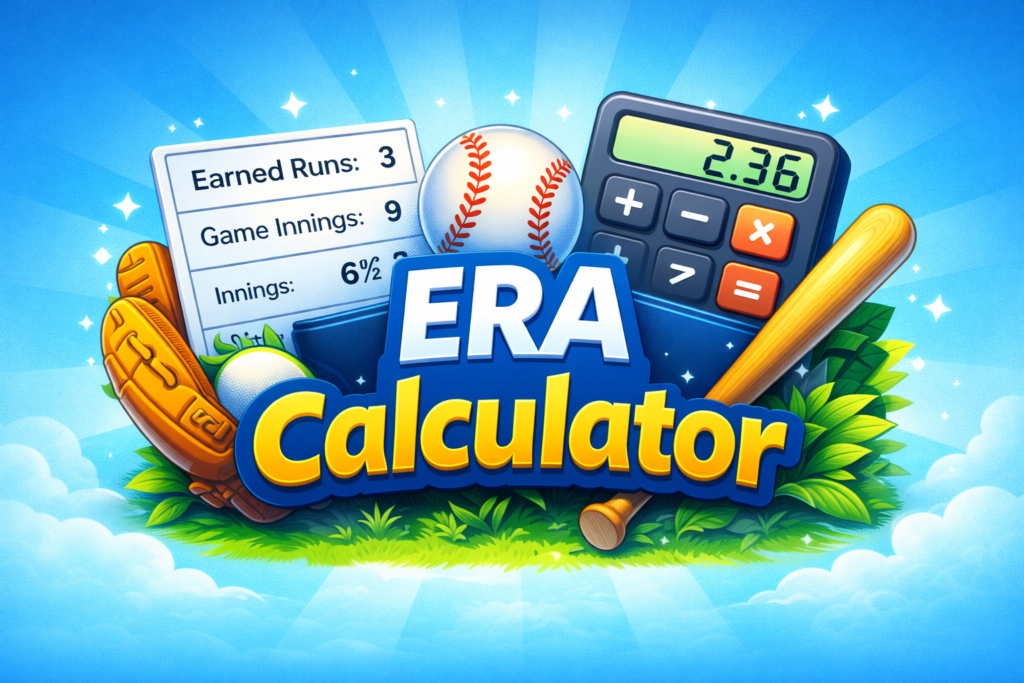
What is ERA in baseball?
ERA stands for Earned Run Average. It measures the average number of earned runs a pitcher gives up per game. A lower ERA usually means better pitching performance. Earned runs are runs the pitcher is responsible for that are not caused by defensive errors or passed balls.
ERA formula
The formula for ERA is:
ERA = (Earned Runs × Game Innings) ÷ Innings Pitched
For most U.S. baseball use cases, game innings are set to 9. Some leagues and softball formats may use different game lengths, so a flexible calculator should allow users to change that value.
How to use this ERA calculator
Enter the total earned runs allowed, then enter innings pitched. If your league uses a different game length, update the innings-per-game field. After that, click calculate to get the pitcher’s ERA instantly. Many baseball tools also support partial innings such as one out or two outs, often represented as 0.1 / 0.2 or .33 / .67, so it is helpful to guide users on accepted formats.
Why this calculator is useful
This calculator is helpful for:
- baseball players tracking performance
- coaches comparing pitchers
- parents following youth baseball stats
- fans reviewing pitching efficiency
- leagues using custom game lengths
FAQ
What is a good ERA?
A lower ERA is generally better because it means fewer earned runs allowed. The exact benchmark depends on league level, age group, and competition.
Does ERA include unearned runs?
No. ERA only includes earned runs. Unearned runs caused by errors or passed balls are excluded.
Why does innings pitched matter?
ERA is normalized by innings pitched, which makes it easier to compare pitchers who have thrown different workloads.